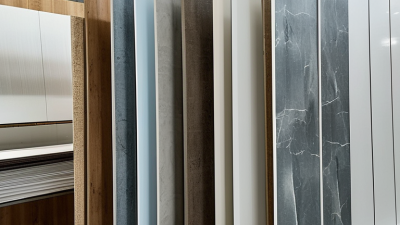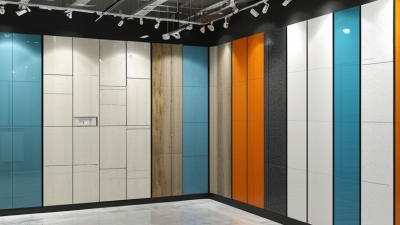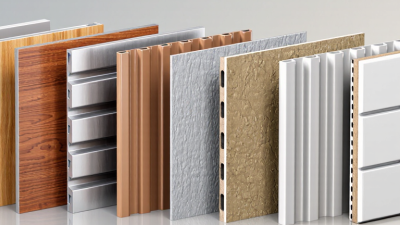
China’s PVC wall cladding market spans large export-oriented factories and smaller specialists. Comparing them takes more than a polished catalog. Buyers should check panel thickness, surface finish, joint design, test documentation, and consistency between samples and production batches. A glossy panel may look convincing under showroom lights. Its edge profile and locking fit tell a more practical story.
Grand View Research’s PVC market analysis and Fortune Business Insights’ building-materials reports provide useful context on material demand and construction trends. However, their market categories are broader than PVC wall cladding alone. Their figures should not be treated as a direct ranking of Chinese cladding suppliers. For this list, manufacturing capability, product range, quality-control evidence, export experience, and communication deserve closer scrutiny. Details matter.
Polymer scientist Dr. Chris DeArmitt’s public materials commentary emphasizes evaluating materials through evidence rather than broad claims; stated here as a paraphrase, not a verbatim quotation. That approach is useful when suppliers describe panels as waterproof, durable, or low-maintenance. Ask what testing supports each claim, and whether the documents match the exact product offered. A small mismatch can matter. This guide examines ten Chinese manufacturers through those buyer-focused checks, while recognizing that company information and product specifications can change. It is not a perfect ranking; supplier verification remains essential.

PVC wall cladding in China commonly uses rigid or foamed PVC profiles, finished with printed films or decorative laminates. Some products have hollow cores; others use denser, solid sections. These differences affect weight, impact resistance, and installation. A panel may look waterproof. Joints, cut edges, and the wall behind it still need careful detailing. Common applications include kitchens, bathrooms, utility rooms, retail interiors, and renovation projects. Textures range from smooth gloss to embossed stone or wood effects, while cleaning needs vary by finish.
China’s construction scale provides useful context. The National Bureau of Statistics reported construction output value of about RMB 31.6 trillion in 2023, up 5.8% year on year. This is a broad sector indicator, not a measure of PVC cladding sales. Globally, Grand View Research estimated the PVC market at USD 78.6 billion in 2023, forecasting 3.8% annual growth from 2024 to 2030. That estimate covers many applications, so it should not be mistaken for wall-panel demand. The market backdrop supports interest in lightweight, easy-to-install materials, but category-specific demand remains hard to isolate. Low purchase cost cannot compensate for poor substrate preparation, uneven joints, or fading in strong sunlight. Details matter.
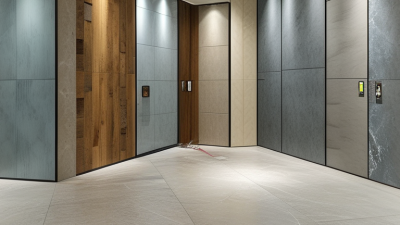
Evaluating Chinese PVC wall cladding manufacturers starts with evidence, not catalogue photos. Request the panel’s technical data sheet, declared thickness, surface finish, and batch identification. Then compare these details with a physical sample. Check edges for voids, measure thickness at several points, and inspect whether the decorative film lifts around corners. Ask for independent test reports covering dimensional stability, impact performance, and fire behavior. Confirm that each report matches the same panel construction you plan to order. A certificate alone is not proof of consistent production. Small differences matter.
Review the factory’s quality records, complaint handling, and ability to trace production batches. UNEP and GlobalABC’s 2023 Global Status Report on Buildings and Construction estimated that buildings and construction account for 37% of global energy- and process-related carbon dioxide emissions. That makes specific, verifiable material and environmental claims more useful than broad “green” language. For shipping, the World Bank’s Logistics Performance Index 2023 ranked China 19th globally. This offers context, not a guarantee of delivery performance. Ask for recent lead-time records, packaging photos, and a written process for handling damaged panels. I would still verify these details directly; paperwork can look reassuring, but the shipment is what counts.
China’s PVC wall-cladding manufacturers vary in scale, product design, and quality-control practices. The China Chlor-Alkali Industry Association’s 2023 industry review reported national PVC resin output of roughly 22 million tonnes. That figure describes upstream resin, not wall-cladding sales.
A useful ten-profile comparison covers distinct capabilities.
These are useful profile types, not a verified ranking. Brochure claims can sound alike; I would check samples and factory records before drawing conclusions.
Tips: Request a sample panel and inspect its cut edge, surface film, and click joint. Ask for test methods and batch records, not just a “waterproof” claim. The resin-output data offers market context, but it cannot confirm any supplier’s finished-panel performance.
A useful comparison of China’s PVC wall cladding manufacturers starts with the products, not the sales pitch. Check whether each supplier offers hollow or solid panels, matching trims, corner pieces, and several surface finishes. Ask for panel thickness, usable width, and installation details. A sample can reveal uneven printing, brittle edges, or a loose tongue-and-groove fit. Small details matter.
Capacity needs careful checking. A large stated output does not guarantee a short lead time for your chosen color or profile. Request monthly production figures, typical order quantities, and a sample production schedule. If possible, compare these with factory audit records or recent order references. Numbers on a brochure are easy to polish.
Certifications should be checked for scope, issuing body, and validity date. Confirm that documents apply to the factory and product under review, rather than a different material or site. Quality systems, emissions reports, and fire-performance tests may address different concerns; none should be treated as a substitute for the others. Ask for test methods and dated reports. A comparison table helps, but it can hide gaps: suppliers may measure capacity or product dimensions differently. Verify the details before choosing.
Sourcing PVC wall cladding from China requires more than comparing quoted prices. Grand View Research estimated the global PVC market at USD 70.3 billion in 2023, with projected annual growth of 4.6% from 2024 to 2030. This covers PVC broadly, not wall cladding alone, so treat it as market context rather than proof of demand. Request a quotation against one clear specification: panel thickness, width, weight, surface finish, and locking profile.
A showroom sample can look convincing under bright lights. Check it in natural light, then inspect cut edges, surface scratches, and joints after installation. Ask for test reports matching the exact product and intended market, including fire-performance and emissions requirements where applicable. Confirm whether reported results cover the supplied formulation and finish. A mismatch can be easy to miss. I would also compare samples from separate production runs; colour and fit may vary, even when the catalogue image stays unchanged.
Logistics deserve equal attention. The World Bank’s 2023 Logistics Performance Index gave China a score of 3.7 and ranked it 19th among 139 economies, but this does not guarantee a smooth shipment. Confirm packaging dimensions, pallet loading, lead time, inspection timing, and responsibility for damage in writing. Request dated production photos and arrange pre-shipment checks against an approved sample. Allow time for corrections. That buffer is often underestimated.
Use these ten evaluation points to compare manufacturers and quotations. Product dimensions, performance, and commercial terms vary by product design and supplier; confirm them against the exact specification and order documents.
| Evaluation Dimension | Common Specification or Information | What to Request or Check | Why It Matters |
|---|---|---|---|
| 1. Product construction | Identify whether the product is a solid PVC panel, hollow-core panel, or a composite product. The core and surface construction affect weight, rigidity, and installation details. | Request a cross-section drawing, material description, sample, and confirmation of whether the panel includes a surface film or coating. | Products described with similar trade terms can have different structures and performance. |
| 2. Dimensions and tolerances | Confirm panel thickness, face width, effective coverage width, length, and dimensional tolerances on the quotation and product drawing. | Ask for measured sample dimensions and the supplier’s written tolerance for each dimension. Clarify whether quoted width is overall or effective coverage width. | Accurate dimensions help prevent installation gaps, excess waste, and quantity mismatches. |
| 3. Intended application | Some PVC cladding products are intended for interior use; suitability for exterior exposure depends on the product formulation, finish, and tested performance. | State the installation location and exposure conditions. Request written confirmation of the recommended application and any exclusions. | Interior suitability does not by itself establish suitability for outdoor use, prolonged sunlight, or severe temperature changes. |
| 4. Moisture and cleaning | PVC is generally resistant to moisture, but joints, edges, penetrations, and the supporting wall can still allow water ingress. | Ask for installation guidance, cleaning instructions, and any available test reports relevant to water exposure or the intended environment. | Panel material alone does not make an entire wall system waterproof. |
| 5. Fire performance | Fire classification depends on the tested product and, where applicable, its mounting and end-use conditions. Do not infer a rating from material type alone. | Request a current test report from a competent laboratory for the exact product and relevant market standard. Check the tested thickness, substrate, and installation method. | Fire requirements vary by jurisdiction and building use; unsupported rating claims can create compliance risks. |
| 6. Surface and colour consistency | Finishes may include printed, laminated, or textured surfaces. Colour and pattern can vary between production batches. | Approve a production sample, specify the acceptable colour reference, and ask how batch consistency and protective packaging are managed. | Early approval reduces the risk of visible differences across a large installation. |
| 7. Quality control and traceability | Inspection procedures and records are supplier-specific; there is no single universal inspection system for all PVC wall cladding. | Ask for the inspection checklist, batch identification method, defect criteria, and permission for pre-shipment inspection against agreed requirements. | Documented checks make it easier to identify and resolve quality issues before dispatch. |
| 8. Order quantity and lead time | Minimum order quantity and production lead time depend on the product, colour, tooling, order size, and current production schedule. | Obtain written terms for the exact specification, including sample timing, production time, packaging time, and the point at which the lead time begins. | Generic estimates may not include custom finishes, holidays, or production queue time. |
| 9. Packaging and shipping | Packaging should protect panel edges and surfaces during handling and transport. Carton or pallet configuration affects shipment volume and damage risk. | Request packing details, bundle quantity, package dimensions, gross weight, loading photos, and confirmation of export packing requirements. | Clear packing information supports freight planning and helps reduce transit damage or quantity disputes. |
| 10. Compliance and purchase terms | Required documents depend on the destination market and project specification. Certification or test documents should match the offered product. | Confirm applicable regulations, document validity, product identity, warranty terms, payment milestones, inspection rights, and the agreed Incoterms® rule. | Written, product-specific terms help align compliance, delivery responsibility, and remedies if goods do not meet the order. |