Leave Your Message

2026 Top PVC Bathroom Wall Panels for Global Buyers

Choosing the right Pvc Bathroom Wall Panels in 2026 requires more than comparing colors and prices. Global buyers now examine water resistance, surface durability, installation speed, fire performance, and long-term supplier reliability. A panel may look impressive under showroom lights, yet fail beside a busy shower if its joints absorb moisture.

Elena Morris, an independent bathroom materials consultant, says, “A reliable wall panel must perform behind the design, not merely decorate the room.” This practical view matters for hotels, apartments, healthcare facilities, and home renovations. Buyers should inspect panel thickness, core structure, edge finishing, locking systems, and available test documentation. Request physical samples. Touch the surface. Check how the pattern continues across adjoining panels.

The strongest Pvc Bathroom Wall Panels combine low-maintenance finishes with stable dimensions and clean installation details. Marble effects remain popular, but soft concrete, terrazzo, wood grain, and muted solid colors are gaining attention. Large formats can reduce visible joints. They can also create handling challenges. That trade-off deserves honest consideration.

Supplier evaluation should include production capacity, packaging quality, lead times, replacement policies, and technical support. Export experience helps, but it does not guarantee consistency. Ask for batch control records and installation guidance. Confirm that claims match available certifications in the target market. Standards differ globally.

This guide compares leading 2026 options for international buyers. It considers performance, design flexibility, cost control, and practical installation risks. Some conclusions may change as testing methods and product formulations improve. That is worth remembering. Good purchasing decisions leave room for evidence, inspection, and careful revision.
2026 Top PVC Bathroom Wall Panels for Global Buyers

PVC Bathroom Wall Panels: Definition, Structure, and Core Benefits

PVC bathroom wall panels are rigid or semi-flexible sheets made mainly from polyvinyl chloride resin. They cover walls instead of ceramic tiles. Most panels use a dense PVC core, a printed decorative layer, and a protective surface film. Some include hollow ribs or a honeycomb structure. These internal spaces reduce weight and improve handling. However, they may reduce impact resistance if the panel is too thin.

Their main benefit is moisture control. A properly sealed panel creates fewer grout lines, where water and dirt often collect. Installation is also faster on a sound, level substrate. Grand View Research reported continued growth in the global wall-panel market, driven partly by renovation demand and easier installation. The 2024 Global Status Report for Buildings and Construction also shows that buildings remain responsible for about 32% of global energy use. Lightweight renovation materials can reduce transport and installation effort, although their total environmental impact still depends on service life and recycling.

Tips: Check panel thickness, core density, fire classification, and water-resistance test results. Measure wall movement too. A cheap panel can look excellent on day one, then show joint gaps after seasonal changes. Use compatible sealant around corners, shower bases, and pipe openings. Do not install over damp walls. No panel fixes hidden moisture. References: Grand View Research, Wall Panels Market Outlook; UNEP, 2024 Global Status Report for Buildings and Construction.
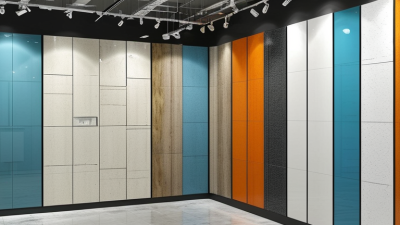
2026 Top PVC Bathroom Wall Panels for Global Buyers

Typical PVC bathroom wall panel formats by thickness and standard panel width

PVC bathroom wall panels are commonly available in thin, lightweight formats from approximately 5–12 mm. Thicker panels generally provide greater rigidity, while standard widths around 250–400 mm support efficient installation and joint coverage. Actual specifications may vary by manufacturer and project requirements.

Key Performance Standards for Global Bathroom Panel Buyers

For global buyers, PVC bathroom wall panels should be judged by tested performance, not surface appearance. Grand View Research estimated the global PVC market at about USD 45 billion in 2023, with continued growth through 2030. That expansion increases choice, but also increases quality variation. Ask for batch-specific technical documents. Do not rely only on a product brochure.

Water resistance is essential, but “waterproof” needs evidence. Check water absorption, joint sealing, dimensional stability, and resistance to household cleaners. ASTM D543 can help assess chemical resistance, while ISO 4892-3 supports accelerated weathering evaluation. A panel may resist direct splashes yet fail around poorly sealed corners. Details matter.

Fire performance also varies by market. ASTM E84 reports flame-spread and smoke-developed indexes, while EN 13501-1 uses different reaction-to-fire classifications. These results are not automatically interchangeable. Request the complete test report, laboratory details, thickness, and installation method. Also review VOC emissions under ISO 16000 methods, especially for small bathrooms with limited ventilation. Market reports from Grand View Research and Mordor Intelligence show strong PVC demand, but growth does not guarantee durable panels. I would treat unusually low prices as a prompt for deeper inspection, not an automatic bargain.

Top PVC Wall Panel Types and Their Best Bathroom Applications

PVC bathroom wall panels vary by surface design, thickness, core structure, and moisture resistance. Embossed panels suit busy family bathrooms because raised textures hide light splashes and minor marks. They work well behind basins, toilets, and laundry-area walls. Tile-look panels create familiar grout lines without hundreds of separate joints. Use them around shower enclosures only when the locking system and sealing details are proven.

A neat appearance depends on preparation, not decoration alone.

High-gloss marble-effect panels reflect light in small bathrooms and make cleaning quicker. They are practical behind vanity units, but strong lighting can reveal uneven walls. Matte stone-effect panels feel calmer and reduce reflections in larger bathrooms. Choose closed-cell panels designed for wet zones, and check independent test information before purchasing.

Panel thickness matters near impact-prone areas. Thin sheets may flex over imperfect substrates. That detail is easy to underestimate.

For shower walls, installers should confirm compatible trims, adhesive, sealant, and ventilation requirements. Corners need continuous sealing around taps, niches, and pipe penetrations. I prefer panels with clear installation guidance and traceable technical data. This supports consistent work across different countries and climates.

Still, no panel fixes a damp wall or poor drainage. Inspect the substrate first. Then match the panel type to water exposure, cleaning habits, and installation skill. Some projects need a simpler design, even when a dramatic finish looks attractive.

How to Compare Waterproofing, Design, Installation, and Maintenance

2026 Top PVC Bathroom Wall Panels for Global Buyers

When comparing PVC bathroom wall panels, start with waterproofing, not color. Inspect the panel core, surface coating, and joint system. A sealed tongue-and-groove edge can reduce water entry around shower areas. Ask for test data on water absorption, dimensional stability, and mold resistance. Samples matter. Press the edges, bend them gently, and check for weak corners. I once saw an attractive panel fail because its joints opened after repeated temperature changes. The product was not always the problem; poor sealing was.

Design should support daily use. Light colors can make a narrow bathroom feel larger, while textured finishes may hide water spots. However, deep textures collect soap residue. Installation also affects performance. The wall must be flat, dry, and free from dust. Measure around pipes before cutting. Leave suitable expansion space near floors, ceilings, and corners. Use compatible adhesives and sanitary sealant. A rushed cut can create a permanent leak path. It happens.

Maintenance is simple when the surface is well selected. Wipe panels with a soft cloth and mild cleaner after bathing. Avoid abrasive pads, strong solvents, and excessive heat. Check corner seals every few months, especially in humid climates. Ventilation remains important, even with waterproof panels. PVC can resist water, but it cannot correct trapped moisture behind the wall. Buyers should compare installation guidance, replacement procedures, surface warranties, and local technical support. Low price may look efficient, yet difficult repairs can cost more later.

Global Purchasing Guide: Suppliers, Certifications, Costs, and Shipping

Global buyers should evaluate PVC bathroom wall panels by evidence, not surface gloss. Grand View Research valued the global PVC market at about USD 45.3 billion in 2023. Its forecast suggests steady growth through 2030. That growth attracts more suppliers, but quality remains uneven. Request production photos, technical datasheets, batch samples, and factory inspection records before placing a large order.

Certifications must match the destination market. Ask for ISO 9001 evidence, but remember it confirms management systems, not panel performance. For European projects, review REACH compliance and EN 13501-1 fire classification. North American buyers may request ASTM E84 results. Check test laboratories, report dates, sample thickness, and fire-rating conditions. Small details matter. A certificate without traceable testing is weak purchasing evidence.

Cost comparisons should include panels, corner trims, packaging, inspection, inland transport, duties, and ocean freight. UNCTAD’s Review of Maritime Transport reports that maritime shipping carries over 80% of global merchandise trade by volume, yet freight prices can change sharply during disruptions. Ask suppliers for FOB and CIF quotations, carton dimensions, loading photos, and moisture-resistant packaging. A 2.7-metre panel can arrive scratched if corner protection is poor. I would also test a small shipment first; even careful calculations can miss local installation waste and unexpected port charges.

2026 Top PVC Bathroom Wall Panels for Global Buyers - Global Purchasing Guide: Suppliers, Certifications, Costs, and Shipping

Comparative sourcing data for international buyers

Supply Region Typical Supplier Profile Common Panel Specification Surface & Core Relevant Certifications / Tests Indicative FOB Cost Typical MOQ Production Lead Time Container Loading Guide Best-Fit Markets
East Asia High-volume extrusion factory with in-house printing and lamination 2.8–5.0 mm thickness; 250–1,220 mm width; 2.6–2.9 m length Rigid PVC foam core; hot-stamped, printed, or high-gloss laminated finish ISO 9001; REACH declarations; RoHS testing; ASTM E84 or EN 13501-1 available by specification US$3.20–8.80/m² 500–1,000 m² per color or design 15–30 calendar days after artwork approval Approximately 1,800–2,600 m² in a 40-foot high-cube container, depending on packaging North America, Europe, Middle East, Southeast Asia
South Asia Flexible-volume manufacturer serving residential and hospitality projects 4.0–8.0 mm thickness; 200–600 mm width; up to 3.0 m length PVC or PVC-composite core; matte, wood-look, marble-look, or textured coating ISO 9001 commonly available; water absorption, dimensional stability, and surface wear reports should be requested US$4.00–10.50/m² 300–800 m² per design 20–35 calendar days Approximately 1,400–2,200 m² in a 40-foot high-cube container South Asia, Africa, Gulf countries, value-focused renovation markets
Southeast Asia Mid-volume producer focused on waterproof panels and modular installation systems 5.0–10.0 mm thickness; 300–1,000 mm width; 2.4–2.9 m length Hollow or solid PVC structure; embossed, UV-coated, or laminated decorative layer ISO 9001; REACH and RoHS documentation; optional mold-resistance and fire-performance reports US$4.50–11.50/m² 300–600 m² per design 18–32 calendar days Approximately 1,500–2,400 m² in a 40-foot high-cube container Australia, ASEAN countries, island markets, humid climates
Eastern Europe Regional producer supplying standardized building-material distribution channels 5.0–10.0 mm thickness; 250–375 mm width; 2.7–2.8 m length Rigid PVC or foamed PVC; digitally printed, satin, or wood-grain surface CE documentation where applicable; EN 13501-1 fire classification; ISO 9001 may be available US$7.50–15.00/m² 100–300 m² per standard design 10–25 calendar days Approximately 1,200–2,000 m² in a 40-foot high-cube container European Union, United Kingdom, Central Asia, nearby land-freight markets
Western Europe Premium manufacturer emphasizing low-emission materials and project compliance 5.0–12.0 mm thickness; 250–1,000 mm width; custom lengths available High-density PVC or composite board; UV-resistant digital print, acrylic, or protective film EN 13501-1; REACH; indoor-air or VOC testing; ISO 9001 and environmental management certification may be available US$12.00–28.00/m² 50–200 m² per finish 15–30 calendar days Approximately 900–1,600 m² in a 40-foot high-cube container Commercial interiors, healthcare, hotels, and high-specification renovations
North America Distributor or converter offering locally stocked standard sizes and custom fabrication 3.0–12.0 mm thickness; 200–1,220 mm width; project-specific lengths PVC sheet, foam board, or composite panel; printed, laminated, or textured finish ASTM E84; ASTM D1784 material data where applicable; SDS and chemical compliance documentation US$14.00–32.00/m² 25–150 m² per standard finish 7–21 calendar days for stocked products; 25–45 days for custom work Container loading varies; local truck delivery is common for smaller orders United States, Canada, institutional and remodeling projects
Middle East Import-oriented supplier or local fabricator serving hotel and residential developments 4.0–10.0 mm thickness; 250–1,220 mm width; moisture-resistant formats preferred Rigid PVC or foam PVC; marble-look, stone-look, metallic, or high-gloss decorative layer REACH; RoHS; ASTM E84 or EN 13501-1 when required by project specifications; UV and thermal-aging reports recommended US$5.00–16.00/m² 200–500 m² per design 18–35 calendar days excluding transit Approximately 1,400–2,300 m² in a 40-foot high-cube container Gulf Cooperation Council markets, North Africa, hotels, villas, and retail fit-outs
Latin America Regional distributor or project supplier combining imported panels with local installation services 4.0–8.0 mm thickness; 250–600 mm width; standard lengths around 2.6–2.9 m PVC foam or hollow-core panel; printed, laminated, or embossed decorative surface Local building-code documentation; REACH or RoHS for imported products; fire and slip-related tests should be confirmed per project US$6.00–17.00/m² 200–500 m² per design 20–40 calendar days excluding customs clearance Approximately 1,300–2,200 m² in a 40-foot high-cube container Residential remodeling, coastal areas, hotels, and low-maintenance wet rooms
Purchasing note: Prices are indicative 2026 FOB ranges in U.S. dollars per square meter and vary with resin grade, thickness, surface treatment, artwork, packaging, order volume, exchange rates, and energy costs. Freight, insurance, import duty, VAT, customs clearance, installation accessories, and inland delivery are excluded. Certification availability must be verified against the exact panel construction, destination-market regulations, and current test reports.