Leave Your Message
-
Facebook
-
Whatsapp
-
Whatsapp

Choosing Pvc Bathroom Wall Panels in 2026 requires more than comparing colours and surface patterns. A realistic assessment must include moisture resistance, panel thickness, joint design, installation quality, and long-term maintenance. Grand View Research reports continued growth in the global polyvinyl chloride market, supported by construction and renovation demand. However, that broader data does not measure bathroom panels directly. Buyers should avoid treating market growth as proof of product quality.
Water protection remains the central issue. Tile educator John Bridge is often quoted as saying, “The tile is not the waterproofing.” The same warning applies here. Pvc Bathroom Wall Panels can create a practical wet-area surface, but they cannot repair a leaking substrate or poorly sealed corner. Check the manufacturer’s technical sheet. Look for tested water resistance, compatible adhesives, fire-performance information, VOC disclosures, and a clear warranty. Independent certification is more useful than attractive showroom claims.
A strong panel should feel stable, cut cleanly, and maintain tight joints around the bath, shower tray, and plumbing penetrations. A glossy sample can mislead. It may hide scratches, uneven walls, or visible seams under bright bathroom lighting. Reports from Grand View Research and Fortune Business Insights indicate expanding demand for PVC-based building products, yet installation quality still determines daily performance. This is where many buying guides oversimplify the decision. Measure the wall carefully, inspect the backing surface, and confirm replacement-panel availability before ordering. The cheapest option may become expensive after one failed seal.
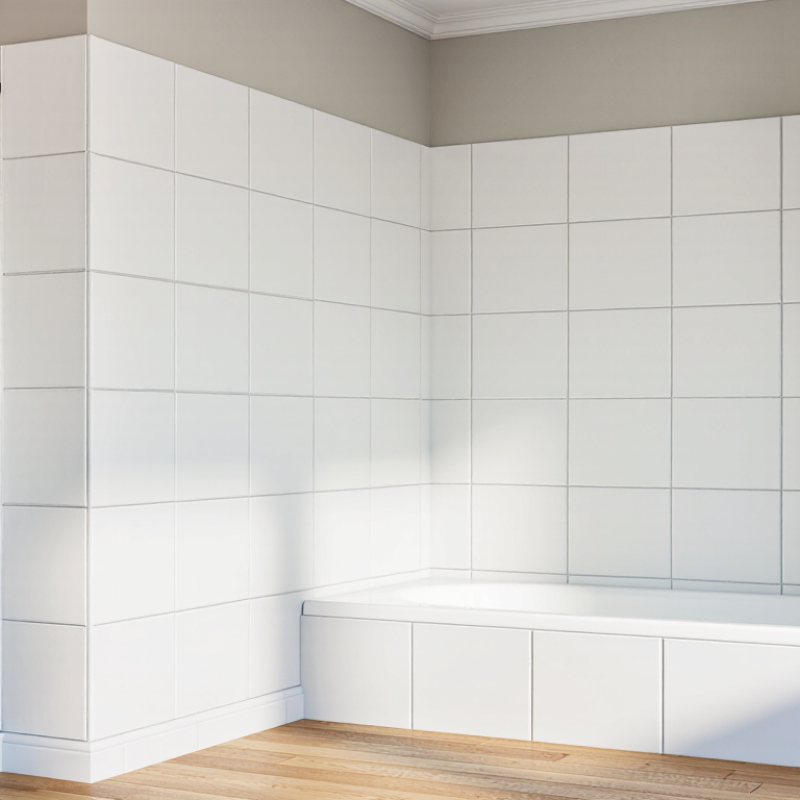
PVC bathroom wall panels are rigid sheets made from polyvinyl chloride, a moisture-resistant plastic. They usually have a printed surface, a waterproof core, and interlocking edges. During installation, panels are cut around pipes and fixed over a sound, dry wall. Sealed joints stop splashes from reaching the substrate. They are not magic, though. Poor sealing can still cause hidden moisture and mold. Some panels are solid PVC; others use a hollow cellular structure for lower weight. Their performance differs considerably.
Market data explains their growing appeal. Grand View Research valued the global PVC market at about USD 45.1 billion in 2023. Its report also forecasts continued growth through 2030, supported by construction and renovation demand. Freedonia’s wall-covering research identifies easy installation and water resistance as important renovation drivers. However, these reports describe broad markets, not every bathroom panel. Product testing matters more than attractive photographs.
Tips: Check the panel thickness, fire classification, surface warranty, and installation instructions. Look for independent testing, low-emission information, and clear batch details. Measure walls carefully, including expansion gaps near ceilings and floors. A level substrate reduces visible waves. Use compatible adhesive and sanitary sealant, especially around shower valves. I would also inspect a sample under bright light; printed textures can look surprisingly artificial. Ventilation remains essential. The U.S. Environmental Protection Agency recommends indoor humidity between 30% and 50%, which helps limit condensation around panels and ceilings.
| Selection Dimension | Typical Data or Working Principle | Why It Matters in a Bathroom | Recommended Check Before Purchase |
|---|---|---|---|
| Material | PVC, or polyvinyl chloride, is a thermoplastic polymer formed into rigid or semi-rigid hollow, embossed, or solid-core panels. | The plastic surface does not readily absorb liquid water and can be wiped clean. | Confirm the panel composition, surface finish, and whether the product is specifically rated for interior wet areas. |
| Common Thickness | Approximately 5–10 mm for many decorative bathroom wall panels; thicker products are also available. | Greater thickness generally improves rigidity, impact tolerance, and the ability to conceal minor wall irregularities. | Choose thickness according to wall flatness, fixing method, expected impact, and the manufacturer’s installation instructions. |
| Panel Size | Typical formats include widths of about 250–1,000 mm and lengths of about 2,400–3,000 mm, although sizes vary significantly. | Larger panels can reduce the number of vertical joints and may speed up installation. | Measure the wall, ceiling height, door openings, and access route. Plan cuts to minimize waste and joints. |
| Water Resistance | PVC itself is water-resistant; a bathroom installation depends on sealed joints, corners, penetrations, and edges. | Water can enter behind panels through open seams or unsealed plumbing penetrations, even when the panel face is waterproof. | Check the compatible sealant, trim system, joint detail, and wet-area installation requirements. |
| Installation Method | Panels may be bonded to a sound wall, fixed over battens, or connected with tongue-and-groove or overlapping profiles. | The substrate condition and ventilation behind the panel affect durability and moisture control. | Verify adhesive compatibility, fixing spacing, required expansion gaps, and whether a backing board or battens are needed. |
| Joint Design | Panels can use visible trims, tongue-and-groove edges, overlapping joints, or sealant-filled seams. | Fewer and better-sealed joints reduce cleaning effort and the chance of water reaching the substrate. | Inspect corner profiles, end caps, joint widths, and the availability of matching waterproof trims. |
| Surface Finish | Available finishes commonly include smooth, embossed, matte, gloss, marble-look, stone-look, and wood-look surfaces. | Smooth surfaces are generally easier to wipe, while textured finishes can conceal minor marks but may need more detailed cleaning. | Review a physical sample under bathroom lighting and check resistance to staining, scratching, and cleaning products. |
| Weight | Many hollow or lightweight PVC panels weigh roughly 2–5 kg/m²; actual weight depends on thickness and internal structure. | Lower weight can simplify handling and reduce demands on the wall during renovation. | Use the declared weight per square metre to confirm transport, handling, and fixing requirements. |
| Moisture and Mold Management | PVC does not provide a food source for mold, but mold can grow on dust, soap residue, damp substrates, or trapped moisture behind panels. | A sealed surface cannot compensate for poor bathroom ventilation or an already damp wall. | Repair leaks, dry the substrate, seal penetrations, and maintain mechanical or natural ventilation. |
| Temperature Performance | PVC expands and contracts with temperature changes. Many products are intended for normal indoor conditions rather than continuous high heat. | Excessive heat or missing expansion allowance can cause bowing, joint movement, or surface deformation. | Keep panels away from direct heat sources unless specifically approved, and follow the stated service-temperature range. |
| Fire Performance | PVC is combustible to varying degrees depending on formulation and construction. Fire classification is product-specific and may be tested under local standards. | Fire performance requirements may apply to residential, commercial, and multi-storey buildings. | Request a current fire-test report or classification for the exact panel and installation system; do not rely on the word “PVC” alone. |
| Cleaning and Maintenance | Routine care usually involves a soft cloth or sponge, warm water, and a mild non-abrasive cleaner. | A non-porous finish can reduce grout-like cleaning work compared with tiled surfaces, but joints still require inspection. | Avoid abrasive pads, solvents, and cleaners not approved for the surface finish. Clean spills and soap residue promptly. |
| Cutting and Fitting | Many thin PVC panels can be scored and snapped or cut with fine-toothed tools; thicker panels may require a saw. | Easy cutting helps fit panels around outlets, pipework, windows, and sanitary fixtures. | Allow for clean, supported cuts and protect exposed cut edges with compatible trim or sealant. |
| Wall Preparation | The wall should be structurally sound, clean, dry, and sufficiently flat for the selected fixing system. | Uneven or damp walls can cause poor adhesion, visible panel distortion, and hidden moisture problems. | Remove loose coatings, repair damp damage, check flatness, and identify studs, pipes, and electrical cables before drilling. |
| Bathroom-Zone Suitability | Some panels are suitable for general bathroom walls, while shower areas require a complete tested or approved waterproof installation detail. | Direct and continuous water exposure places greater demands on joints, corners, substrates, and penetrations. | Confirm that the exact product and installation method are approved for shower or wet-zone use before installation. |
| Environmental Considerations | PVC products can be durable and low-maintenance, but their environmental profile depends on recycled content, service life, additives, and end-of-life recycling options. | Long service life and low replacement frequency can reduce material use, while disposal options vary by location. | Ask about recycled content, product declarations, local recycling routes, and disposal requirements. |
| Best Overall Choice Criteria | The most suitable panel balances wet-area approval, joint design, thickness, surface durability, installation method, fire performance, and maintenance needs. | A visually attractive panel is not sufficient if the substrate, seals, trims, or local building requirements are unsuitable. | Compare technical data sheets and installation instructions for the exact product rather than choosing by appearance or price alone. |
Note: Dimensions, weights, temperature limits, fire classifications, and wet-area approvals vary by product and region. Always verify the current technical documentation and local building requirements before installation.