Leave Your Message

Top 10 Types of Bathroom Ceiling Cladding for Buyers

Choosing Bathroom Ceiling Cladding means balancing moisture resistance, appearance, installation effort, and long-term upkeep. A ceiling faces warm steam, condensation, and occasional splashes, so a material that looks attractive in a showroom may not suit every bathroom. Small details matter: check the panel’s stated use, cleaning guidance, and compatibility with your ceiling structure before buying.

This guide compares ten common types, including PVC, acrylic, laminate, and metal options. Each has trade-offs. PVC panels are often lightweight and easy to wipe, while metal finishes can create a crisp, reflective look. Wood-effect products add warmth, but their suitability depends on their construction and the room’s ventilation. No single choice wins everywhere.

Measure carefully. Check the available fixing method, joint design, access to lights or fans, and whether the product can be cut neatly around fittings. Ask suppliers for technical information rather than relying on appearance alone. Where electrical fittings or ventilation are involved, follow product instructions and consult a qualified installer when needed.

Expect a few surprises. A sample can look different under bathroom lighting, and narrow rooms may make seams more noticeable. The comparisons ahead can help buyers shortlist suitable materials, but they cannot replace checking the exact product specification. A little extra research now may prevent a ceiling that is difficult to clean or maintain later.
Top 10 Types of Bathroom Ceiling Cladding for Buyers

How to Classify 10 Bathroom Ceiling Cladding Types by Material and Use

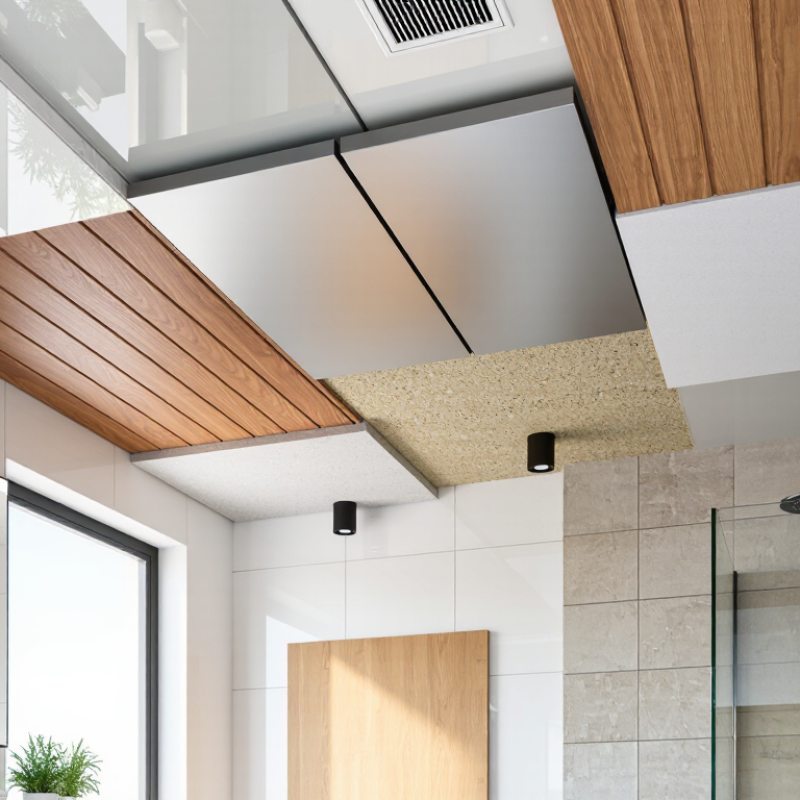
Bathroom ceiling cladding is best classified by material and moisture exposure. PVC panels are lightweight and easy to wipe, while aluminum panels suit humid rooms and concealed service access. Stainless-steel panels offer a durable, washable surface, but can feel stark. Mineral-fiber tiles help absorb sound in larger bathrooms, though persistent dampness may damage some products. Gypsum board gives a smooth painted finish when specified for humid interiors and properly sealed.

Cement-board panels resist moisture better than ordinary gypsum, but need suitable joints and finishes. Laminate-faced panels provide varied colors and wood-like patterns; damaged edges can be a weak point. Wood slats add warmth, yet require careful sealing and ventilation. Bamboo panels offer a similar natural look, but their coatings and installation details matter. Glass-fiber-reinforced panels are practical where frequent cleaning is expected. ASTM E84 test data are often used to assess surface flame spread; under common code classifications, Class A corresponds to an index of 0–25. That rating does not prove moisture resistance.

Tips: Match the panel to the room’s ventilation, not just its appearance. Check product data for wet-area suitability, joint details, and cleaning limits. A beautiful ceiling can still fail at an unsealed edge. I would inspect those edges before choosing a finish.
PVC, Acrylic, FRP, and Polycarbonate: Compare Moisture Resistance and ASTM E84 Ratings

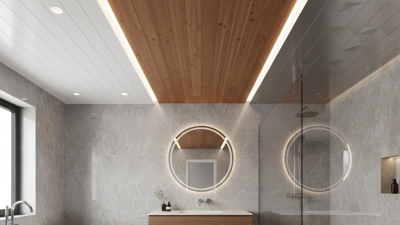
Bathroom ceiling panels face warm vapor, splash droplets, and repeated temperature changes. PVC is lightweight and resists moisture, but poorly sealed joints can let damp air reach the ceiling cavity. Acrylic offers a smooth, bright surface; check its product data for heat limits and scratch resistance. FRP panels tolerate wet conditions and clean easily, though seams and edges still need careful detailing. Polycarbonate can transmit light, but condensation and thermal movement deserve attention. No panel is maintenance-free.

ASTM E84 ratings describe surface-burning behavior, not moisture resistance. Class ratings depend on tested results, and they do not automatically describe every installation. Ask for the exact product’s current test report, including flame-spread and smoke-developed results. Also verify whether the report covers the panel alone or a tested assembly. Similar-looking materials may have different ratings. Check local building requirements before choosing a product, especially where fire performance is specified.

Tips: Compare written moisture guidance, E84 documentation, and installation instructions side by side. Seal cut edges where required, use compatible fasteners, and provide suitable ventilation. A glossy sample can look convincing under showroom lights. It may reveal little about long-term seams or cleaning. I would inspect those details before ordering; that step is easy to overlook.

Aluminum, Steel, and Mineral-Fiber Panels: Compare Fire and Corrosion Performance

Aluminum panels suit bathrooms where steam and occasional splashes are routine. Their oxide surface generally resists corrosion, and smooth finishes are easy to wipe. Still, scratched edges, trapped moisture, or contact with incompatible metals can create trouble. Check the coating specification, joint details, and cleaning guidance. A panel that looks sound from below may hide damp framing above.

Steel panels can provide a stiff, clean ceiling, but exposed cut edges and damaged coatings may rust in persistent condensation. Galvanized or coated steel can reduce this risk; it does not remove the need for ventilation and careful installation.

Mineral-fiber panels often offer useful acoustic absorption, and some products have strong fire classifications. Yet moisture resistance varies, so confirm the exact panel rating before using it in a steamy room.

Not always. Fire performance depends on the tested assembly, including the panel, suspension system, and penetrations for lights or vents. I would not judge safety by material name alone. A small cutout around a recessed fixture can change the assembly’s performance, and that detail is easy to overlook. Check test documentation and keep panels clear of leaks before comparing appearance or price.

Timber, Laminate, and Gypsum: Check Humidity Limits and Maintenance Needs

Bathroom ceiling cladding must tolerate humid air, condensation, and repeated cleaning. The U.S. Environmental Protection Agency’s A Brief Guide to Mold, Moisture and Your Home recommends keeping indoor relative humidity below 60%, ideally between 30% and 50%. A bathroom can exceed that range during showers, so ventilation matters as much as the panel itself. Brief showers help, but an effective exhaust fan is better.

Timber gives a warm finish, but it needs sound sealing on every face and cut edge. Persistent damp can cause swelling, staining, or movement at joints. Check for soft spots and peeling coating; repair them early. Do not assume a clear finish makes timber waterproof. Edges matter.

Laminate resists splashes at its surface, yet water can enter seams or exposed core. Wipe condensation and inspect joints near the shower. Moisture-resistant gypsum board handles humid rooms better than standard board, but it is not waterproof and still needs suitable paint or a compatible finish. Keep it away from direct, repeated spray unless the assembly is rated for that exposure. Small stains deserve attention. I would verify the product’s stated humidity limits before buying; the room’s ventilation and maintenance routine can change how long any ceiling lasts.

Top 10 Types of Bathroom Ceiling Cladding for Buyers — Timber, Laminate, and Gypsum: Check Humidity Limits and Maintenance Needs

Type Typical humidity suitability Advantages Maintenance needs Buyer checks
PVC panels Generally suitable for humid bathrooms; the panel material resists water, but joints and the ceiling cavity still need appropriate detailing and ventilation. Lightweight, water-resistant, and available in wipeable finishes. Wipe with a soft cloth and mild cleaner; avoid abrasive pads and solvents that may damage the surface. Check panel-joint details, fire-rating requirements, and whether the installation allows inspection of services above the ceiling.
Acrylic panels Usually appropriate in humid areas when installed with sealed joints and compatible trims; confirm the product’s bathroom-use instructions. Smooth, non-porous surface that is easy to clean and can create a bright appearance. Clean with a soft cloth and non-abrasive cleaner; abrasive products can scratch the finish. Check heat and light exposure limits, expansion allowances, and recommended sealants.
Aluminum panels Typically performs well in humid conditions; corrosion resistance depends on the alloy, coating, and exposure environment. Non-absorbent, durable, and available in modular or linear systems. Wipe clean with a soft cloth and mild detergent; avoid cleaners that could harm the coating. Verify coating suitability, edge protection, fixing compatibility, and access-panel options.
Solid timber boards More sensitive to repeated moisture changes than non-porous materials; suitability depends on species, finish, ventilation, and installation. Natural appearance and can be refinished if the surface is accessible and in sound condition. Keep ventilation effective, inspect for finish wear, and renew the protective coating as directed by its manufacturer. Allow for movement, protect cut ends, and avoid use where persistent condensation or leaks cannot be controlled.
Engineered wood or laminate-faced panels The face may resist splashes, but the core and exposed edges can swell if moisture gets in; use only products rated for the intended environment. Offers a wood-look finish with consistent panel dimensions and a range of surface patterns. Dust or wipe gently; promptly dry moisture and check seams and edges for damage. Confirm the core’s moisture rating, edge sealing, and warranty conditions for bathroom use.
High-pressure laminate (HPL) panels The laminate surface is moisture-resistant, but the substrate, joints, and perimeter details determine how well the complete system handles humidity. Hard-wearing decorative surface with many colors and patterns. Clean with a soft cloth and mild cleaner; keep water from entering unsealed joints or damaged edges. Check the substrate, joint system, cut-edge treatment, and approved cleaning products.
Moisture-resistant gypsum board with bathroom paint Designed to tolerate humid interior conditions better than standard board, but it is not waterproof and should not be exposed to persistent wetting. Creates a continuous, paintable ceiling with a familiar installation system. Clean painted surfaces gently; inspect for peeling, staining, soft spots, or damaged joints and repair promptly. Use the board, jointing compound, primer, and paint specified for the exposure; follow local requirements for shower areas.
Fiber-cement boards Generally more tolerant of moisture than ordinary gypsum board, but joints, coatings, and the supporting assembly still need suitable protection. Stable sheet material that can provide a durable base for an appropriate finish. Maintain the applied finish and sealant; follow safe handling instructions when cutting or sanding. Check weight, framing requirements, joint treatment, and whether the finished system is approved for overhead use.
Mineral-fiber ceiling tiles Standard tiles can absorb moisture; only tiles specifically rated for high humidity should be considered, and direct wetting should be avoided. Suspended grid systems can provide convenient access to pipes, wiring, and ventilation equipment. Dust gently and replace stained or sagging tiles; avoid soaking or scrubbing porous surfaces. Verify humidity classification, sag resistance, grid suitability, and clearance for ceiling-mounted fixtures.
Painted plaster ceiling Can work in bathrooms with suitable preparation, ventilation, and paint; persistent condensation or leaks can damage the finish and substrate. Seamless appearance and no panel joints to collect surface grime. Clean gently and repaint when the coating deteriorates; address condensation, peeling, or cracks before they spread. Use a bathroom-suitable coating system and confirm the underlying plaster is dry, sound, and properly prepared.

Humidity suitability is a general comparison, not a substitute for product instructions. Check the complete ceiling system’s specifications, local building requirements, and ventilation needs; no cladding should be treated as a remedy for leaks or persistent condensation.

Buyer Selection: Match Cladding to IRC Bathroom Ventilation of 50 CFM Intermittent or 20 CFM Continuous

Choosing bathroom ceiling cladding means planning for moisture, not just appearance. The IRC lists bathroom exhaust rates of 50 CFM intermittently or 20 CFM continuously in applicable provisions. Local adoption and project conditions can vary, so confirm the required rate with your building department. A fan must also move air through its installed duct, not only meet a rating on paper. Moisture always finds gaps.

PVC panels and coated metal resist surface moisture, but seams and penetrations still need careful detailing. Painted gypsum board is easy to repair, though persistent condensation can damage its finish. Wood can look warm, yet needs suitable sealing and regular inspection. None of these materials replaces exhaust ventilation. Run the fan during bathing and long enough afterward to clear damp air. A tissue held near the grille can show whether air is being drawn in, but it cannot verify CFM. Not a complete test. Check fan performance and duct routing, especially when a mirror stays fogged or the ceiling feels damp. Choose cladding that tolerates the room’s conditions, then keep the ventilation system accessible for cleaning and repair.

Top 10 Types of Bathroom Ceiling Cladding for Buyers

Compare indicative moisture tolerance when choosing a ceiling finish. Ratings are qualitative buyer-guide comparisons, not standardized test results; performance varies by product, installation, and maintenance.

Ventilation: IRC guidance commonly uses local exhaust rates of 50 CFM intermittent or 20 CFM continuous. Check the edition adopted by your jurisdiction and the fan’s installed performance. Ventilation helps manage moisture but does not make a cladding material waterproof.