Why Choose Plastic Wall Panels for Global Projects?
Why Choose Plastic Wall Panels for Global Projects? The answer begins with practical pressure. International buildings often face humid air, sudden temperature changes, busy construction schedules, and uneven maintenance support. Plastic Wall Panels can provide a clean, durable surface with consistent dimensions. They are also lightweight, which may reduce handling time and transport complications. In hospitals, hotels, schools, and modular buildings, that matters.
Building-science expert Joseph Lstiburek has often stressed a simple principle: “Water is the enemy.” His point is highly relevant to wall finishes. Properly specified Plastic Wall Panels can resist surface moisture and simplify routine cleaning. However, panels cannot correct poor drainage, hidden leaks, or careless installation. They are not magic. Sealants, joints, substrates, and ventilation still require professional attention.
Global projects also demand evidence, not attractive samples alone. Project teams should review fire performance, impact resistance, chemical compatibility, hygiene requirements, and regional building codes. A panel that performs well in a dry office may fail in a coastal kitchen. That uncomfortable detail deserves attention. Supplier experience, documented testing, installation training, and replacement support can influence lifecycle value more than the lowest purchase price.
From my perspective, the strongest case for Plastic Wall Panels is controlled performance under real operating conditions. A well-selected system can reduce cleaning effort and protect busy interiors. It can also create a consistent appearance across multiple locations. Yet designers should compare recycled content, end-of-life options, and long-term repair needs. Global success depends on balanced decisions. Beauty helps. Reliability carries the project.
What Are Plastic Wall Panels and How Are They Made?
Plastic wall panels are lightweight interior or exterior cladding products made from engineered polymers. Common materials include PVC, polyethylene, and composite plastic blends. They protect walls from moisture, stains, and daily impacts. This makes them useful for hotels, clinics, schools, and modular buildings across different climates.
Manufacturing usually begins with dried polymer resin and carefully measured additives. Stabilizers improve durability, while pigments create consistent color. The mixture is heated and pushed through a shaped die during extrusion. The warm sheet then passes through cooling rollers. Some panels receive a printed surface, protective film, or textured finish. Manufacturers should check thickness, color, flatness, impact resistance, and fire performance. Small production errors can become visible under strong lighting. That detail is easy to underestimate.
Tips: Confirm the panel’s intended environment before ordering. Check moisture exposure, temperature changes, cleaning methods, and installation tolerances. Ask for current test documentation from a qualified supplier. Local building requirements may differ between countries. Leave room for expansion where temperature changes are significant. Measure twice. Cut once. Also consider end-of-life handling, because plastic recycling options vary widely. A panel can perform well for years, yet its environmental profile depends on material selection, service life, and responsible disposal.
Why Plastic Wall Panels Suit Diverse Global Environments
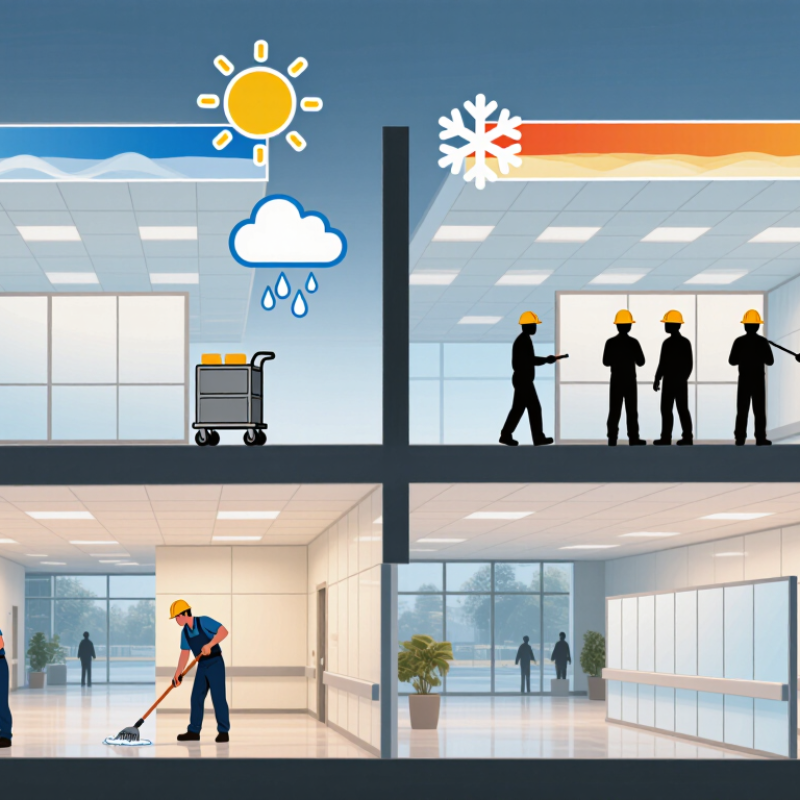
Plastic wall panels suit diverse global environments because they tolerate moisture, frequent cleaning, and demanding installation conditions. A coastal clinic may face salt-laden air, while a mountain school may experience freeze-thaw cycles. In both settings, low-porosity surfaces can reduce water absorption and simplify daily maintenance. On active sites, panels may also shorten wet-trade work and limit curing delays. The weak point is often the joint. Poor sealing can undermine an otherwise durable wall system.
Climate suitability still requires evidence. The 2023 Global Status Report for Buildings and Construction states that buildings consumed 34% of global energy and produced 37% of energy- and process-related carbon emissions in 2022. Lightweight interior systems may support lower installation impacts, but manufacturers should provide verified environmental data. Specify fire performance through applicable local classifications and tests, such as ASTM E84 where relevant. Check VOC emissions using recognized methods, including ISO 16000 procedures. Allow movement gaps in hot regions, and inspect substrates carefully in humid rooms. That detail is easy to miss.
Plastic also creates a design responsibility. The OECD Global Plastics Outlook reported 353 million tonnes of plastic waste in 2019, more than double the 2000 level. Therefore, project teams should request recycled content, service-life information, and realistic end-of-use options. “Low maintenance” is not the same as “low impact.”
Installation, Maintenance, and Lifecycle Considerations
Plastic wall panels can simplify installation on global projects, especially where schedules and labor skills vary. Experienced installers check the wall for moisture, dust, and uneven areas before fixing panels. The substrate must be dry and stable. Panels should rest indoors before installation, allowing them to adjust to local temperature. Small expansion gaps matter. They prevent buckling when rooms become hot.
Installation quality decides much of the panel’s service life. Use compatible adhesives, mechanical fixings, and sealants for the specific environment. Wet rooms need carefully sealed joints around sinks, corners, and penetrations. Poor alignment becomes obvious under strong lighting. It is frustrating, but common. A clear installation guide with drawings, tolerances, and inspection points helps different crews produce consistent results.
Maintenance is usually simple, but not careless. Clean surfaces with a soft cloth and mild detergent. Avoid abrasive pads that create dull scratches. Inspect seams, corners, and fasteners during scheduled building checks. Replace damaged sections instead of removing an entire wall. Lifecycle planning should also consider spare panels, transport distance, expected humidity, and end-of-use handling. Recycling options differ between regions, so project teams should verify local facilities before specifying them. Lower maintenance does not mean zero maintenance. That assumption can fail.
Why Choose Plastic Wall Panels for Global Projects?
Installation, maintenance, and lifecycle planning benchmarks for common interior wall finishes
Plastic wall panels typically require fewer installation workdays and less recurring maintenance labor than ceramic tile or painted gypsum board. The service-life figures shown are practical planning ranges; actual results depend on product specification, substrate condition, climate, traffic, cleaning methods, and local installation practices.
Planning basis: typical commercial fit-out benchmarks per 100 m² of wall area. Values are indicative ranges converted to midpoint estimates and should be verified against project-specific specifications.
How to Evaluate Plastic Wall Panels for a Global Project
Why Choose Plastic Wall Panels for Global Projects?
How to Evaluate Plastic Wall Panels for a Global Project
Evaluating plastic wall panels starts with the project environment, not the catalog. Check humidity, temperature swings, sunlight, cleaning chemicals, and impact exposure. A panel suitable for a dry office may fail in a coastal clinic. Request technical data, safety sheets, test reports, and installation instructions. Verify that testing matches the destination country’s building and fire requirements.
Examine the panel’s core, surface coating, thickness, and dimensional stability. Ask how it performs near corners, joints, doors, and service openings. Request physical samples. Bend them carefully, inspect the edges, and compare color under different lighting. Small defects can become obvious across a large wall. We often learn more from samples than from attractive photographs.
Global projects also need dependable logistics and consistent quality. Confirm packaging, container loading, replacement quantities, batch control, and storage limits. Review whether local installers can cut and fix the panels with available tools. A technically strong product may still create delays if instructions are unclear. I have seen specifications overlook movement joints, and that mistake was expensive. No checklist is perfect. Recheck assumptions with the architect, contractor, and local compliance consultant before approval. Consider cleaning frequency, repair access, expected service life, and end-of-life handling, rather than focusing only on purchase price.