Choosing the 2026 best Plastic Wall Cladding starts with the wall behind the panel, not its color. Global buyers face different climates, building methods, and performance requirements. A coastal project may need careful attention to moisture and corrosion around fixings. A sun-exposed façade needs credible information on UV resistance and color stability. Small details matter.
Building scientist Joseph Lstiburek’s wall-system approach offers a useful guide. A practical paraphrase of that approach is: “Choose cladding as part of a wall system that manages water, air, and heat.” This is not a verified verbatim quotation or an endorsement of plastic panels. It is a reminder to assess the complete assembly. Ask suppliers for product data, installation instructions, warranty terms, and applicable fire-performance documentation. Check how panels expand, how edges are finished, and whether replacement pieces will remain available. A sample beside a window can reveal texture and glare that a brochure hides.
This guide compares Plastic Wall Cladding options through practical buyer questions: material quality, climate suitability, installation demands, maintenance, and supplier support. It also considers the limits. Plastic panels can vary widely, and a low purchase price may not reflect long-term upkeep or installation needs. No panel fits every project. Even a well-documented product can disappoint when installed over a poorly prepared wall. That part deserves more attention than it often gets.
Plastic wall cladding is not one material with four labels. PVC panels are widely used in wet rooms because they resist moisture and are easy to clean. Their heat and sunlight performance depends on formulation and installation. PE cladding can absorb impacts, but its flexibility and thermal movement need attention. PP often offers good chemical resistance; outdoors, UV stabilizers matter. Wood-plastic composites combine wood fibers and polymers for a more textured finish. They can feel warmer underfoot, though cut edges and fixings still need protection from moisture.
The choice should match the site, not just the sample board. Check panel thickness, fire-test documentation, expansion gaps, surface temperature, and replacement availability. PlasticsEurope’s Plastics – the Fast Facts 2024 reports 413.8 million tonnes of plastics produced worldwide in 2023; that figure covers all plastics, not cladding.
The OECD’s Global Plastics Outlook (2022) estimates that only 9% of plastic waste was recycled in 2019. End-of-life options therefore deserve a place in purchasing discussions. One caveat: a “recyclable” label does not guarantee local collection or processing.
Ask suppliers for material composition and installation guidance. Details matter. A low-cost panel may still become expensive if sunlight fades it or joints admit water.
Compare Material Data: ASTM D638 Tensile and ASTM D790 Flexural Tests
Plastic cladding data deserves a closer look than a single strength figure. ASTM D638 measures tensile behavior, while ASTM D790 evaluates flexural properties under a specified loading setup. They answer different questions. MatWeb’s published material listings show typical rigid PVC tensile strengths around 40–55 MPa, compared with roughly 20–37 MPa for HDPE. These are grade-dependent reference ranges, not guarantees for finished panels. That matters.
Flexural stiffness can help explain whether a panel resists bending between supports. Published MatWeb listings commonly place rigid PVC flexural modulus near 2.4–4.1 GPa, while HDPE often falls around 0.7–1.5 GPa. Higher stiffness is not automatically better; impact, temperature, thickness, and support spacing also affect performance. ASTM D790 results depend on specimen dimensions and test conditions, so compare reports only when their methods match. Ask suppliers for the actual grade, conditioning details, and complete test report. I would hesitate to rank cladding from tensile strength alone. A neat table can hide a poor comparison.
For global buyers comparing plastic wall cladding, ask for ASTM E84 test results showing Class A performance: flame spread index (FSI) 0–25 and smoke-developed index (SDI) no higher than 450. The 2024 International Building Code, Table 803.1.1, lists these limits for Class A interior wall and ceiling finishes.
Check the actual report, not only a product sheet. It should identify the tested material, thickness, backing, and mounting method.
ASTM E84 measures surface-burning behavior in a controlled tunnel; it does not predict every room fire or certify an entire wall assembly. That distinction matters. A test result may apply only to the sample configuration, while site conditions can differ.
Not fireproof.
Before ordering, confirm that the proposed installation matches the tested setup and that local project requirements accept the classification. Also check whether the report clearly states both indices: meeting the FSI limit alone does not establish Class A if SDI exceeds 450.
A reassuring label is useful, but the underlying test details deserve a closer look.
For global buyers, plastic wall cladding should be judged by measured weathering, not a bright showroom sample. ISO 4892 describes laboratory methods for exposing plastics to light, heat, and moisture; the chosen lamp, cycle, and duration should be stated. Ask for the exact test report, including specimen color, thickness, and conditioning. A result from one formulation cannot automatically predict another.
UV exposure can fade pigments, chalk surfaces, or reduce impact strength. Inspect both color change and physical performance, especially around cut edges and fasteners. Moisture testing should consider repeated wetting and drying, not just a brief soak. Temperature cycling matters too. Panels expand and contract, while joints and clips may behave differently. Test assembled sections when possible. Small gaps reveal a lot.
Laboratory data helps compare options, but it does not reproduce every climate or installation. Salt air, shade, ventilation, and cleaning routines change exposure. One report may look reassuring. Check whether the test duration and acceptance limits match the project’s expected service conditions. I would also request retained samples for periodic comparison; honestly, that step is often overlooked. For large orders, consider independent testing and record batch details so later performance claims can be checked.
2026 Best Plastic Wall Cladding for Global Buyers?
Installation costs start before the first panel is fixed. The Plastics Pipe Institute’s Handbook of PVC Pipe reports a typical PVC thermal expansion coefficient near 54 micrometres per metre per degree Celsius. A three-metre panel exposed to a 40°C temperature swing could move about 6.5 millimetres. Cladding formulations vary, so confirm movement limits with product test data. Small gaps matter. Use slotted fixings where specified, and avoid tightening panels hard against the substrate.
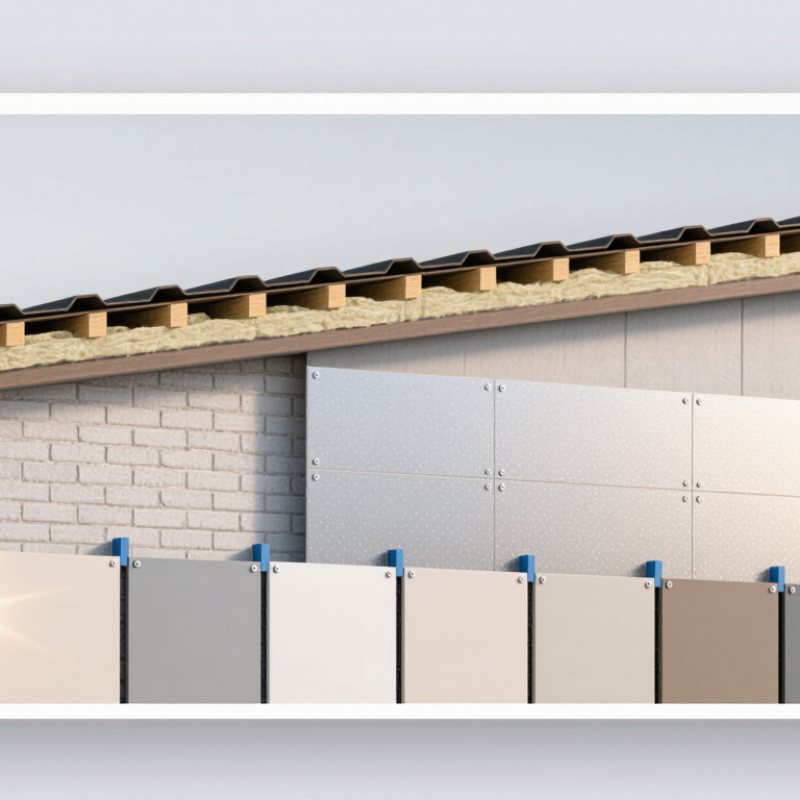
Drainage details shape long-term performance. ASTM E2273 provides a method for evaluating drainage in exterior insulation systems; it is a useful reference, not proof that every cladding assembly drains equally well. Specify a continuous cavity, clear outlet paths, and flashing above openings. Check corners and window sills after rain. A blocked base outlet can hold water behind panels, even when the surface looks sound.
Compare lifecycle costs, not only purchase prices. Include battens, trims, access equipment, cleaning, repairs, and replacement intervals. Ask for written warranty terms covering colour change, cracking, fastening, and installation conditions. Record batch details and keep a few spare panels for future repairs. Maintenance estimates are often optimistic; site access can make a small repair surprisingly costly.